

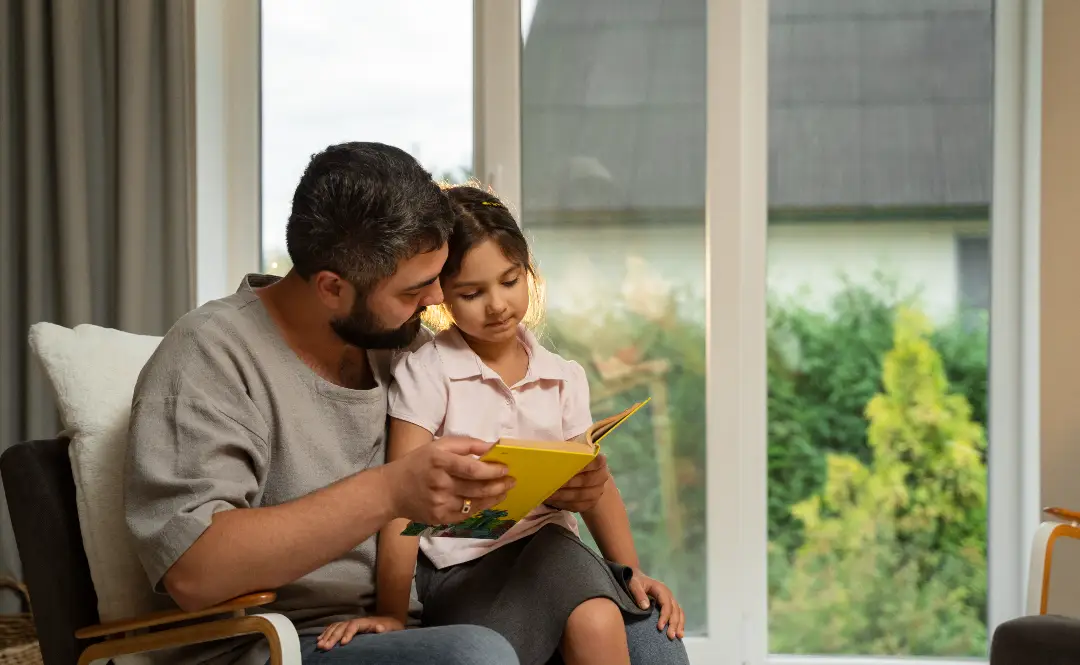
In our society, we often see mothers dedicating their entire lives to their children. Right from an early age, women are taught that caring for the household, family, and child is a natural maternal instinct and responsibility. Even today, despite increasing empowerment and independence, women are still expected to manage home, work, and caregiving together.
We often admire women by calling them multitaskers or powerhouses, and rightly so. But even the strongest person needs support, a strong backbone that stands steadily beside her.
What New Horizons Child Development Program Sessions Reveal
During New Horizons Child Development Program sessions, one observation stands out consistently: mothers are almost always present. Their attendance and involvement in parental sessions is nearly 100%, while fathers and the family appear far less frequently. This is not to diminish the remarkable work mothers do. Their dedication, patience, and emotional investment are truly exceptional.
But NHDP, at its core, is built on the principle of engagement. The framework recognises that a child’s development does not happen in isolation it happens within relationships. And the most foundational relationship system a child has is the one formed by both parents and the whole family together.
The Therapy Ecosystem
New Horizons Child Development Program functions as a therapy ecosystem, not a single intervention delivered in a room, but a living network of interactions that extends across the clinic, the home, and every environment the child inhabits. Within this ecosystem, the therapist works as a guide, but the parents are the primary agents of change.
Parent coaching is a structured and essential component of this ecosystem. It is not simply about teaching techniques it is about helping parents understand their child’s developmental profile, recognise cues, respond appropriately, and build routines that support progress. When only one parent receives this coaching, the ecosystem is incomplete. Insights remain with one person. Strategies are applied inconsistently. The child receives a different environment depending on who is present.
When the father steps into this ecosystem attending sessions, participating in coaching, observing and practising alongside the mother the ecosystem becomes whole. The child now experiences consistent language, consistent responses, and consistent warmth from both caregivers. This consistency is not a small detail. In NHDP, it is everything.
What Changes When Fathers Are Involved
When fathers actively participate, mothers often gain an unspoken sense of support and confidence. Knowing that their partner stands beside them emotionally and practically makes the journey less overwhelming. Even when challenges arise or when external pressures appear, that shared responsibility strengthens the family’s ability to support the child.
With both parents engaged in the coaching process, they begin to connect the different pieces of their child’s development more effectively understanding how social behaviour leads to communication, how communication builds school readiness, and how each small milestone is part of a larger journey. As a result, the child’s progress tends to become more consistent, and in many cases, noticeably faster.
Nurturing Is Not Gendered
They say a mother nurtures but a father nurtures too. Their approaches and styles may differ, but their intention is the same. Research and clinical observation within developmental frameworks consistently show that paternal engagement contributes uniquely to a child’s growth particularly in areas of communication, confidence, and social interaction. A father’s voice, play style, and presence offer the child a different but equally vital form of engagement.
For a child, love, presence, and active involvement from both parents is the most powerful foundation for development. It is, in many ways, the child’s first experience of a team and it becomes the template for how they learn to engage with the world.
Parenting as a Shared Coaching Journey
Within the NHDP framework, parent coaching is designed to be a shared experience. Sessions are most effective when both parents are aligned in their understanding of the child’s needs, consistent in their responses, and mutually supportive in carrying strategies into daily life. A therapist can open the door but it is the parents, together, who walk through it every single day.
In the end, parenting is not a solo role. It is a partnership. And when both parents walk the journey together present in sessions, engaged in coaching, and united in their commitment the impact on the child’s development can be truly transformative.
At New Horizons Child Development Centre, we have had the privilege of witnessing this transformation first-hand. Across numerous cases, when fathers have stepped into the therapy journey alongside mothers attending sessions, engaging with coaching, and showing up consistently, the shift in the child’s progress has been both visible and profound. These are not isolated instances; they are a pattern we have observed repeatedly over years of clinical practice. And the results become even more remarkable when the entire family moves as a unit, when grandparents, siblings, and extended caregivers all align around a shared understanding of the child’s needs.
A family that speaks the same language of care, responds with the same warmth, and holds the same expectations creates an environment that a child can truly thrive in. At New Horizons Child Development Centre, we do not just treat a child; we work with the family because that is where the real development happens.
Why is father’s involvement specifically important in NHDP, when the mother is already attending sessions?
NHDP is built around the idea that a child’s development is shaped by their entire caregiving environment, not just one person within it. When only the mother attends, the strategies and understanding gained in sessions remain with her alone. The father, who spends significant time with the child, continues to interact without that shared framework. This creates an inconsistency in the child’s environment that can slow progress. When both parents are aligned through coaching, the child receives a consistent, enriched experience across all interactions which is central to how NHDP achieves results.
What does parent coaching in NHDP actually involve for fathers?
Parent coaching is not a lecture or a checklist. It is a guided, practical process where parents learn to observe their child’s cues, understand their developmental stage within the NHDP framework, and apply specific strategies during everyday routines play, mealtimes, transitions, and conversation. For fathers, this often begins with simply observing a session, then gradually participating. Over time, the father becomes an informed and active member of the child’s therapy ecosystem, contributing his own unique style of engagement in a purposeful way.
What if the father has limited time due to work commitments?
This is one of the most common concerns raised in NHDP sessions, and it is entirely valid. Involvement does not require the father to attend every session. Even periodic attendance once a fortnight, or during key review sessions combined with brief daily check-ins at home using coached strategies, can make a meaningful difference. The goal is not perfect attendance but consistent awareness and intentional engagement. A father who understands the framework and applies even small moments of purposeful interaction at home contributes significantly to the child’s progress.
How does having both parents involved affect the mother’s experience in the therapy process?
Mothers who are the sole attendees in therapy often carry an invisible emotional weight — the responsibility of understanding, remembering, implementing, and explaining everything to their partner. When fathers join the process, this weight is shared. Mothers report feeling more confident, less isolated, and more optimistic about outcomes when their partner is genuinely engaged. Within NHDP’s ecosystem model, this emotional shift in the mother also positively influences her interactions with the child, creating a ripple effect across the entire caregiving environment.
Can grandparents or other caregivers also be part of the NHDP therapy ecosystem?
Absolutely. While the focus of this article is on parental involvement, NHDP recognises that many children are raised within extended family systems where grandparents, aunts, or other caregivers play a significant daily role. The therapy ecosystem is most effective when all primary caregivers share a basic understanding of the child’s developmental needs and are applying consistent strategies. Parent coaching can, where appropriate, be extended to include these individuals — ensuring the child’s environment remains coherent and supportive regardless of who is present.
Contributed by
Mr Sarthak More
Masters in Clinical Psychology
Clinical Head – NHCDC Goregaon (East)